Meccha Chameleon Hider Guide
You start every round as a plain white chameleon. Winning as a Hider isn’t about finding the cleverest corner — it’s about turning yourself into something the Seeker’s brain skips over. This guide walks through the rule of three, how to budget your prep time, and the small tells that get even good disguises tagged.
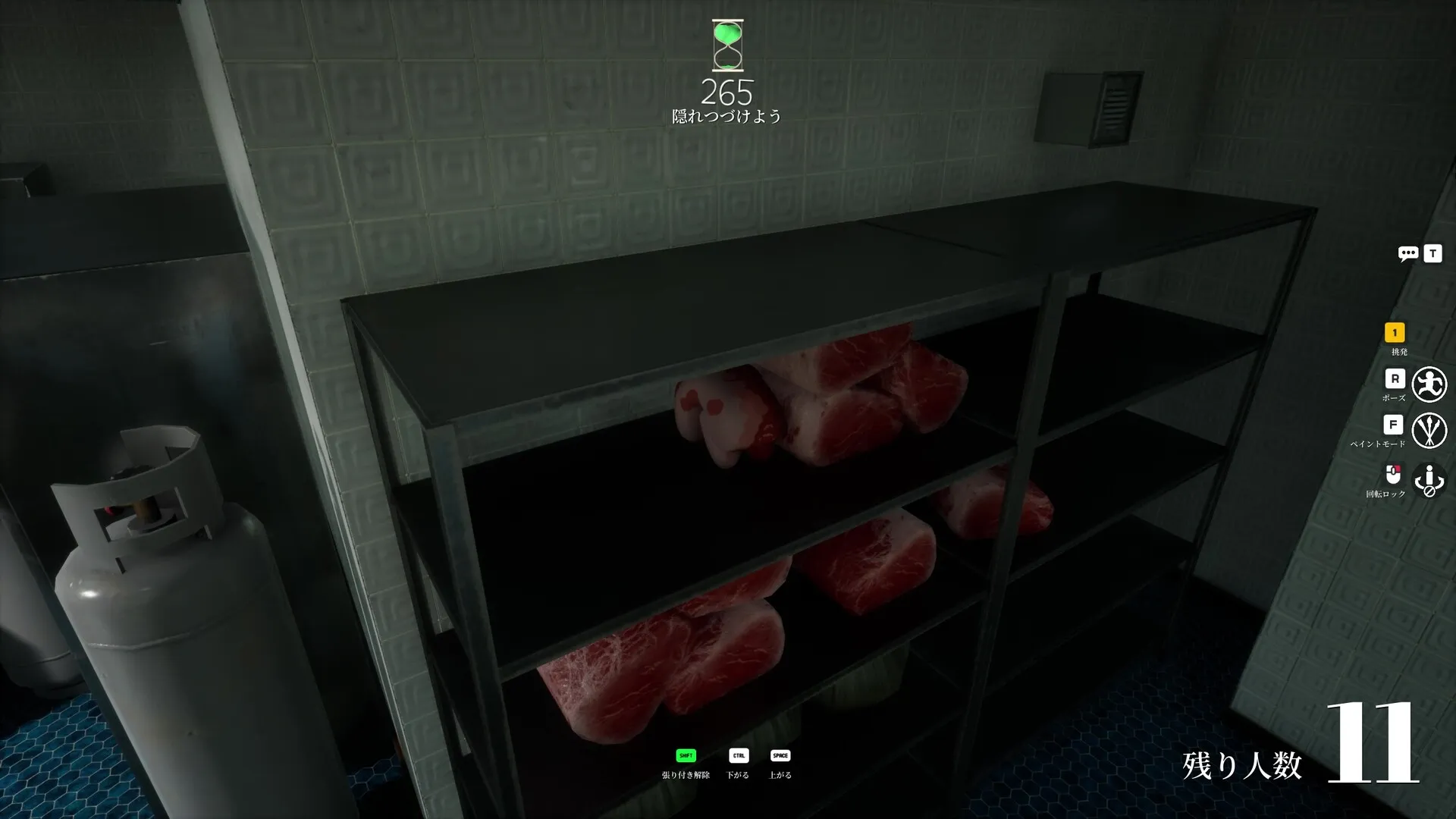
The rule of three: location, paint, pose
A disguise only holds up when all three of these pass at once: location, paint quality, and pose. A perfect color match in a bad pose still gets tagged. Don’t over-invest in one and ignore the others — a believable shape in a sensible spot with an 80%-good color beats a flawless color standing somewhere nothing belongs.
Budget your prep phase
Prep is short, so spend it in order. Pick your hiding zone in the first third of the prep window, sample your colors immediately with the eyedropper, then use everything left to refine your edges and lock your pose. Hunting for the “perfect” spot until the timer runs out leaves you half-painted when the Seekers release.
Hide like an object, not like a player
Pick a disguise that already belongs in the room. Flatten into a framed painting in a gallery room, curl up as produce on a kitchen shelf, or pose as one balloon among many in a party room. Repeating a prop shape that the room already contains is the safest play. Center-of-room spots only work when your paint is genuinely flawless — otherwise stay in clutter.
Match the light
Find the room’s real light source and paint to it: brighter on the lit side of your body, darker on the shadowed side, in the same direction as the actual lighting. A flat, evenly-painted body reads as fake the moment a Seeker walks past it.
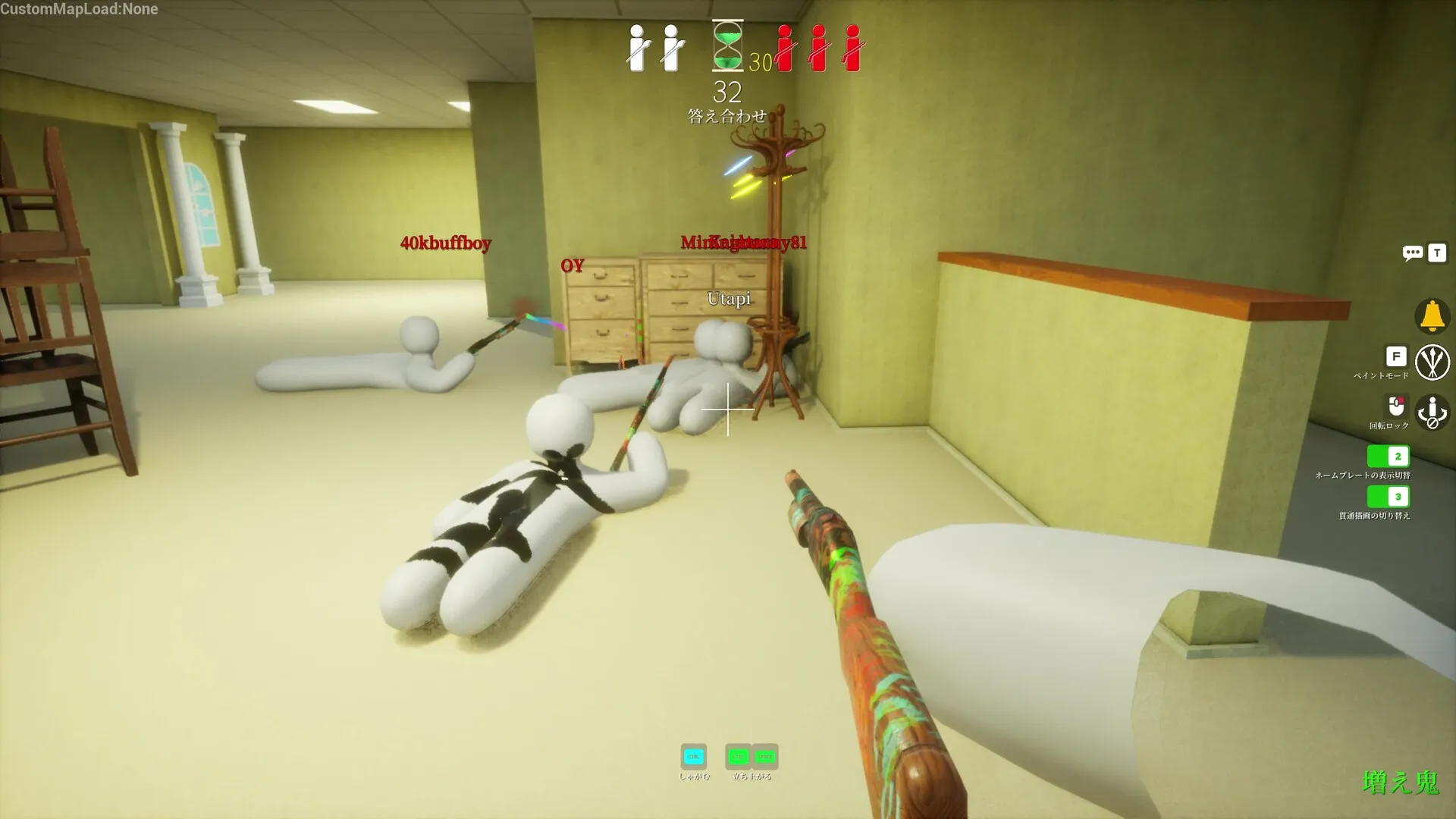
Don’t leave white gaps
The most common round-ender isn’t a bad spot — it’s white showing through. White elbows, knees, and the gaps between your limbs flag you instantly against a colored surface. Before the hunt starts, rotate your camera (middle mouse) and check every joint for unpainted white.
Hold still — and use the decoys
Micro-movement is the number-one tell experienced Seekers watch for. Once the hunt begins, stop moving. And if a nearby Hider painted themselves loudly and badly, stay put: Seekers tag the obvious decoy first and often move right along.