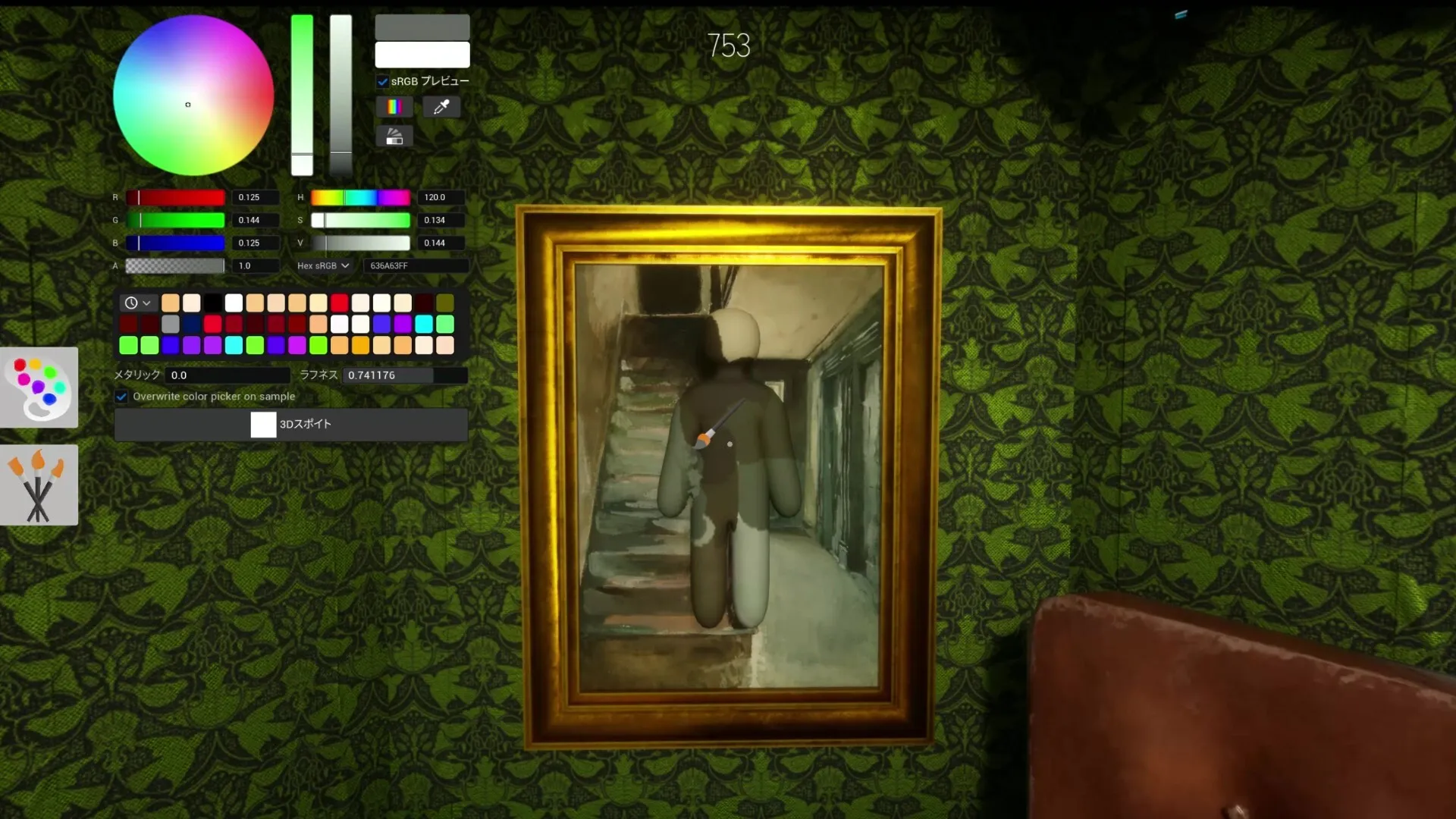
The eyedropper — also called the Spoid — samples color directly from the environment into your
palette. It is the fastest way to match nearby surfaces, and most guides call it the single most
important tool in the game: it copies colors directly from walls, floors, shadows and objects so
you never have to eyeball a hue.
The eyedropper copies a color straight off any surface.
How it works
Point the eyedropper at any wall, floor, shadow or prop and it pulls that exact color into your
palette. From there you can apply it straight away or refine it with the HSV/RGB sliders. Because
it reads the actual rendered surface, it captures the real in-game lighting on that spot — which
matters more than the "true" color of the object.
Gradient sampling
A flat single color rarely holds up. The reliable technique is to sample three values from the
same surface: highlight, mid-tone and shadow. Then paint the lit side of your body brighter and
the shadowed side darker, following the same direction as the room's actual light source. That
makes your body catch light the way the prop next to you does.
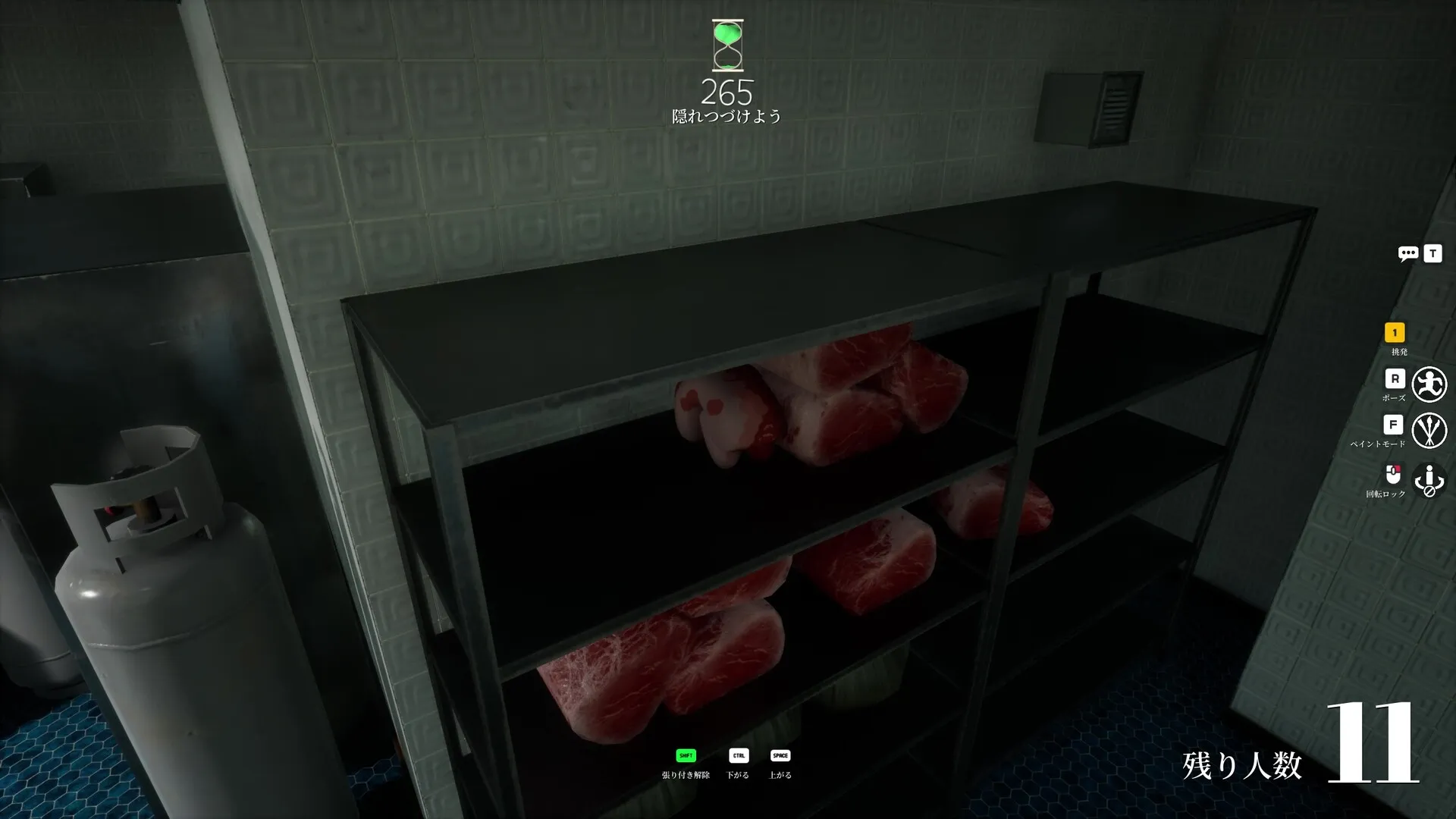
Match the room's light direction, not just its color.
Frequently Asked Questions
What is the eyedropper (Spoid) in Meccha Chameleon?
It is the tool that samples a color directly from the environment into your palette — the fastest way to match a nearby surface, and widely considered the most important paint tool.
How do I match a gradient surface?
Sample three values from the same surface — highlight, mid-tone and shadow — then paint your lit side brighter and your shadowed side darker, in the same direction as the room light.
Should I use bright or muted colors?
In clutter, muted wins. A slightly imperfect muted color in a good cluster beats a perfect bright color in the open, because a clean over-saturated patch stands out against dirty surroundings.